
TABLE OF CONTENT
- 7 Yoga Poses for Constipation: Gentle Asanas to Support Digestion
- How Can Yoga Help With Constipation?
- Yoga poses :
Tadasana (Mountain Pose)
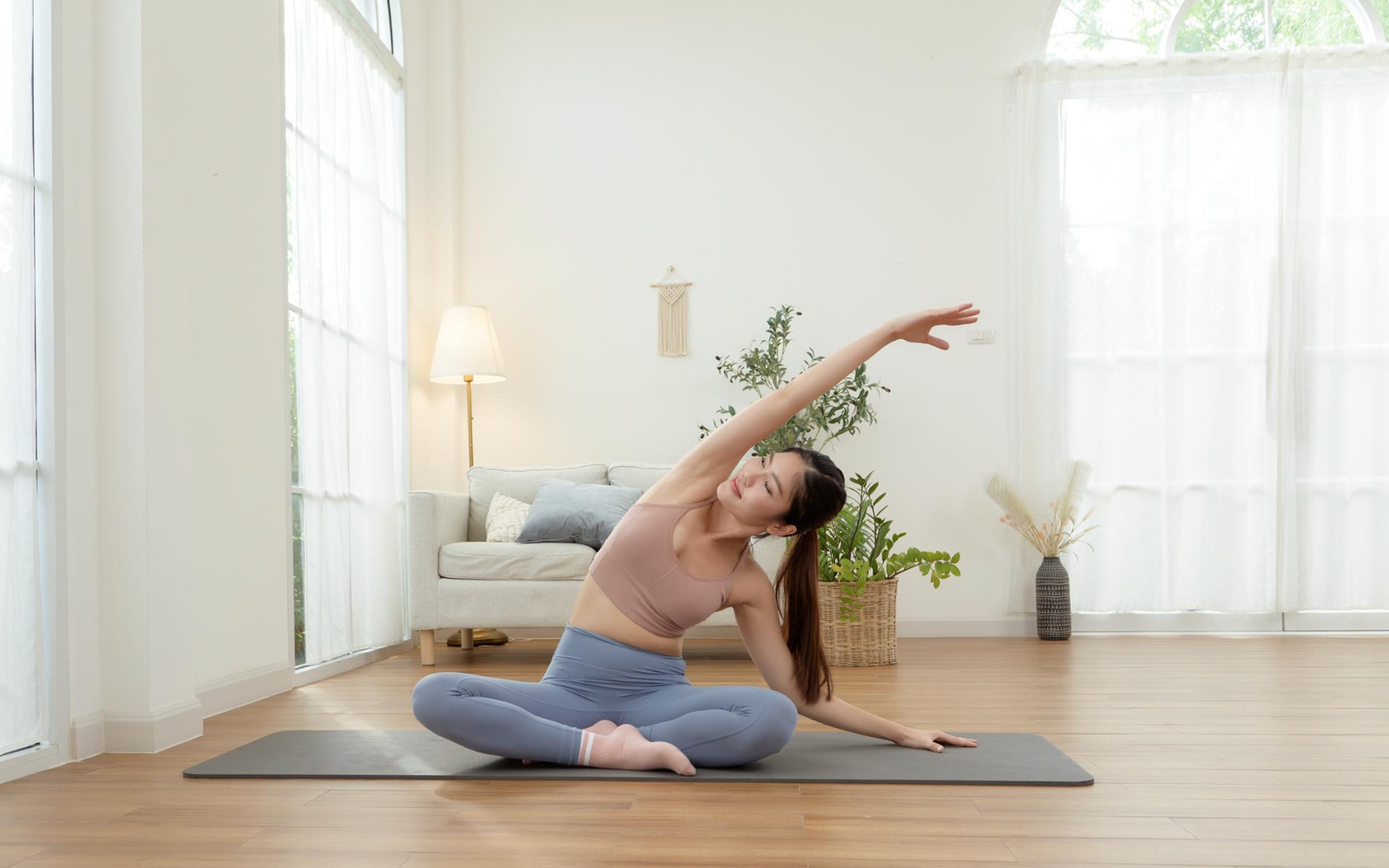
Tiryak Tadasana (Swaying Palm Tree Pose)
Kati Chakrasana (Standing Waist Twist)
Udara Karshanasana (Abdominal Twisting Pose)
Bhujangasana (Cobra Pose)
Tiryak Bhujangasana (Twisting Cobra Pose) - Additional Habits That May Help Relieve Constipation
- When Should You Avoid Yoga for Constipation?
- Frequently Asked Questions About Yoga Poses for Constipation
7 Yoga Poses for Constipation: Gentle Asanas to Support Digestion
Have you ever felt uncomfortable because your stomach feels heavy, your bowel movements are irregular, or you are struggling to pass stool? Constipation is a common digestive concern that can affect your comfort and everyday routine. Although changes in diet, hydration, physical activity, and daily habits are often important, gentle movement may also be a useful part of managing it.
Yoga offers a way to bring movement, breathing, and body awareness into your daily routine. Certain yoga poses involve gentle abdominal movement, twisting, stretching, or squatting positions that may support comfortable movement and relaxation.
In this guide by Shanti Space Yoga, we explore seven yoga poses for constipation: Tadasana, Tiryak Tadasana, Kati Chakrasana, Malasana, Udara Karshanasana, Bhujangasana, and Tiryak Bhujangasana. You will learn how to practise each asana, understand its potential benefits, and discover ways to build a gentle yoga routine at home.
Remember that yoga is a complementary wellness practice, not a guaranteed cure for constipation. The poses below should feel comfortable and should never involve forcing or straining.
How Can Yoga Help With Constipation?
Constipation can occur for several reasons, including insufficient dietary fibre, inadequate fluid intake, limited physical activity, changes in routine, certain medications, or underlying health conditions.
Yoga may be helpful as part of a broader approach to digestive health because it combines movement, controlled breathing, and relaxation. Gentle physical activity can support normal bowel function, while a regular routine may help some people become more aware of their body’s natural signals.
Different yoga poses involve different types of movement:
- Standing stretches encourage whole-body movement and flexibility.
- Gentle twists introduce rotational movement through the trunk.
- Squatting postures place the body in a position that may be useful for some people when working on comfortable bowel habits.
- Backbends and prone poses encourage movement through the spine and trunk.
- Mindful breathing can help you practise without unnecessary tension or straining.
There is limited evidence that any individual yoga pose directly treats constipation. Yoga is best used alongside established measures such as eating enough fibre, drinking adequate fluids, staying physically active, and maintaining regular toilet habits.
1. Tadasana (Mountain Pose)
A simple standing pose to begin your practice
Tadasana, also known as Mountain Pose, is a foundational standing posture in yoga. Although it appears simple, it encourages you to notice your posture, distribute your weight evenly, and coordinate gentle breathing with an upright position.
For a digestive wellness routine, Tadasana can serve as a comfortable starting point before moving into stretches and twists.
How to practise Tadasana
- Stand upright with your feet together or comfortably hip-width apart.
- Distribute your weight evenly across both feet.
- Keep your knees relaxed rather than locking them.
- Lengthen your spine and allow your shoulders to settle naturally.
- Let your arms rest beside your body, with your palms facing inward.
- Breathe slowly and comfortably while maintaining the posture for 20–30 seconds.
- Release any unnecessary tension and return to normal standing.
Potential benefits of Tadasana
- Encourages awareness of posture and balance.
- Provides a gentle starting point for a yoga sequence.
- Helps you coordinate movement with comfortable breathing.
- Prepares the body for standing stretches and rotational poses.
Beginner tip: If standing still feels uncomfortable, keep your feet slightly apart and use a wall for support.
Duration: 20–30 seconds, repeated 2–3 times if comfortable.
SEO keyword: Tadasana yoga pose.
2. Tiryak Tadasana (Swaying Palm Tree Pose)
Stretch gently from side to side
Tiryak Tadasana is a standing side-bending variation of Tadasana. The movement involves reaching upward and gently bending the torso to one side before returning to the centre and repeating on the other side.
Unlike a simple forward bend, this posture focuses on lengthening the sides of the body. It can introduce gentle movement through the waist and trunk without requiring you to get down onto the floor.
How to practise Tiryak Tadasana
- Stand with your feet approximately hip-width apart.
- Raise both arms overhead, keeping them comfortably extended.
- Interlace your fingers if that feels natural, and turn your palms upward.
- Inhale and lengthen your spine.
- As you exhale, bend gently to the right without twisting your torso.
- Keep both feet grounded and avoid leaning forward.
- Return to the centre while inhaling.
- Repeat the movement on the left side.
- Continue alternating sides slowly for 4–6 repetitions.
Potential benefits of Tiryak Tadasana
- Stretches the sides of the torso.
- Encourages gentle movement through the waist and trunk.
- Develops body awareness and flexibility.
- Adds variety to a gentle movement routine.
Beginner tip: Keep the range of motion small. The goal is to feel a comfortable side stretch, not to bend as far as possible.
Duration: 4–6 alternating repetitions.
SEO keyword: Yoga stretches for digestion.
3. Kati Chakrasana (Standing Waist Twist)
Introduce gentle rotation into your routine
Kati Chakrasana is a standing twisting posture in which the upper body rotates from side to side while the lower body remains relatively stable.
The pose encourages rotational movement through the torso and may help you become more aware of how your spine, shoulders, and hips move together. It is a useful transition between standing stretches and other gentle asanas.
How to practise Kati Chakrasana
- Stand with your feet comfortably apart, approximately shoulder-width.
- Keep your knees soft and your spine upright.
- Raise your arms to about shoulder height, or bend your elbows and bring your hands in front of your chest.
- Gently rotate your torso to the right.
- Allow your arms to follow the movement without forcing the twist.
- Return to the centre.
- Rotate gently to the left.
- Continue alternating sides while breathing normally.
Move slowly and avoid bouncing or using momentum to force a deeper rotation.
Potential benefits of Kati Chakrasana
- Encourages mobility through the trunk.
- Provides gentle rotational movement for the spine.
- Helps develop coordination and postural awareness.
- Offers a simple way to include movement in a daily wellness routine.
Beginner tip: Keep your hips relatively steady and rotate only as far as feels comfortable. If you have back pain or a spinal condition, ask a qualified healthcare professional whether twisting movements are appropriate for you.
Duration: 6–10 gentle alternating twists.
SEO keyword: Kati Chakrasana benefits.
4. Malasana (Garland Pose or Yogic Squat)
Explore a comfortable squatting position
Malasana is a deep squat in which the hips lower toward the floor while the torso remains relatively upright. Depending on your mobility, you may bring your palms together in front of your chest and use your elbows gently against your inner knees.
A comfortable squatting position can be relevant to bowel habits because body position influences the angle of the anorectal passage. However, the effects of a yoga squat vary between individuals, and Malasana has not been established as a treatment for constipation.
How to practise Malasana
- Stand with your feet slightly wider than hip-width, adjusting the angle of your toes as needed.
- Slowly bend your knees and lower your hips toward the floor.
- Keep your heels grounded if your mobility allows.
- Bring your palms together in front of your chest.
- Lengthen your spine and allow your shoulders to relax.
- Keep your knees tracking in the same general direction as your toes.
- Breathe comfortably and hold the posture for a few seconds.
- Press through your feet and rise slowly, using support if needed.
Potential benefits of Malasana
- Encourages mobility in the hips and ankles.
- Challenges balance and lower-body flexibility.
- Introduces a squat position that may help some people explore comfortable bowel positioning.
- Encourages awareness of posture and breathing.
Beginner tip: Place a stable, folded blanket beneath your heels or sit on a yoga block for support. Never force your knees or hips into a deep squat.
Duration: 10–20 seconds to start, gradually adjusting according to comfort.
SEO keyword: Malasana benefits.
Important: If you have knee, hip, or ankle problems, or are pregnant, seek appropriate guidance before practising a deep squat.
5. Udara Karshanasana (Abdominal Twisting Pose)
Practise a gentle seated or squatting twist
Udara Karshanasana is an abdominal twisting posture traditionally associated with certain yogic cleansing sequences. Variations commonly involve a squat or low seated position, with the torso rotating and the knees moving in a controlled manner.
The movement brings rotation through the trunk and changes the relationship between the thighs and abdomen. Although this may feel like a gentle abdominal massage, it should not be presented as a proven method for removing waste or curing constipation.
How to practise a gentle variation
- Stand with your feet comfortably apart.
- Lower into a supported squat only if your knees, hips, and ankles tolerate it.
- Place your hands on your knees or thighs for stability.
- Gently rotate your torso to one side.
- If comfortable, guide the opposite knee inward while maintaining a relaxed posture.
- Return to the centre before repeating on the other side.
- Keep your breathing natural and avoid pressing forcefully into your abdomen.
Traditional versions can involve more complex positioning. Beginners should learn the appropriate variation from a qualified yoga instructor rather than attempting an unfamiliar full posture from written instructions alone.
Potential benefits of Udara Karshanasana
- Introduces rotational movement through the torso.
- Encourages awareness of the abdominal area.
- Develops coordination between the trunk and lower body.
- Adds variety to a gentle yoga movement sequence.
Beginner tip: If squatting is uncomfortable, choose a supported standing twist instead. Do not compress your abdomen forcefully or hold your breath.
Duration: 2–4 gentle repetitions per side, if comfortable.
SEO keyword: Udara Karshanasana for digestion.
Safety note: Avoid this pose if you have abdominal pain, recent abdominal surgery, a suspected hernia, or another condition for which twisting or compression has been restricted by your healthcare professional.
6. Bhujangasana (Cobra Pose)
Gently extend your spine
Bhujangasana is a prone backbend in which you lie on your stomach and lift your chest while keeping the lower body grounded. The posture focuses on spinal extension and controlled movement through the upper back.
It is often included in traditional yoga sequences associated with digestive wellness. However, there is not strong evidence that Cobra Pose itself improves bowel movements or treats constipation.
How to practise Bhujangasana
- Lie on your stomach with your legs extended behind you.
- Place your palms beside your chest, with your elbows bent and close to your body.
- Rest your forehead on the mat and relax your shoulders.
- Inhale and gently lift your head and chest using your back muscles.
- Use your hands for light support without pushing yourself into a deep backbend.
- Keep your pelvis and lower body grounded.
- Lift only to a height that feels comfortable for your lower back.
- Breathe normally for a few seconds.
- Exhale and lower your chest slowly to the mat.
Potential benefits of Bhujangasana
- Encourages spinal extension and upper-body mobility.
- Engages the muscles of the back.
- Develops awareness of posture and controlled movement.
- Can form part of a balanced yoga sequence.
Beginner tip: Start with a low Cobra Pose. Keep your elbows bent and avoid lifting so high that you feel compression in your lower back.
Duration: 10–15 seconds, repeated 2–3 times if comfortable.
Safety note: Avoid the pose if it causes back pain. Seek professional guidance if you have a spinal condition, recent surgery, or a condition that makes prone backbends unsuitable.
SEO keyword: Bhujangasana benefits.
7. Tiryak Bhujangasana (Twisting Cobra Pose)
Combine gentle extension with rotation
Tiryak Bhujangasana is a variation of Cobra Pose that adds a gentle sideways rotation of the head and upper torso. In traditional forms, the practitioner lifts the chest and turns to look toward one heel, then repeats the movement on the other side.
Because it combines a backbend with rotation, the pose requires more attention to alignment than a simple standing twist.
How to practise Tiryak Bhujangasana
- Lie on your stomach with your legs extended behind you.
- Place your palms beside your chest and keep your elbows close to your body.
- Inhale and lift your chest gently into a low Cobra Pose.
- Keep your pelvis and lower body grounded.
- Slowly turn your head and upper torso to the right, looking toward your left heel only if this is comfortable and matches the variation being taught.
- Return to the centre without dropping your chest abruptly.
- Gently rotate to the other side.
- Return to the centre and lower yourself to the mat.
Different teaching traditions describe the direction of the gaze and rotation differently. Learn the exact variation from a qualified instructor and do not force the neck or lower back to achieve a particular position.
Potential benefits of Tiryak Bhujangasana
- Encourages controlled movement through the upper back.
- Combines gentle spinal extension with rotation.
- Develops body awareness and coordination.
- Provides an alternative to a basic Cobra Pose for practitioners who can perform the movement comfortably.
Beginner tip: Practise a low Cobra Pose first. Add only a small rotation, keeping your shoulders relaxed and your neck comfortable.
Duration: 2–3 gentle repetitions per side, provided the movement is pain-free.
Safety note: Avoid this pose if you have acute back or neck pain, a recent abdominal or spinal operation, or any restriction on twisting or backbending.
SEO keyword: Yoga asanas for constipation.
A Simple Yoga Routine for Digestive Wellness
If you are new to yoga, you do not need to practise all seven poses in one session. Start with movements that feel comfortable and gradually build a routine around your needs.
Here is one possible gentle sequence:
- Tadasana: Stand comfortably and settle into your breathing.
- Tiryak Tadasana: Add gentle side stretches.
- Kati Chakrasana: Introduce small standing twists.
- Malasana: Try a supported squat if it is appropriate for your body.
- Bhujangasana: Practise a low Cobra Pose if comfortable.
- Tiryak Bhujangasana: Add a gentle rotation only if you can perform Cobra Pose without discomfort.
- Rest: Finish in a comfortable position and allow your breathing to return to normal.
Udara Karshanasana is best learned under appropriate instruction, especially if you are unfamiliar with traditional squatting and twisting variations.
You may choose a few poses for a short session rather than completing the entire list. The objective is comfortable movement, not intensity.
Additional Habits That May Help Relieve Constipation
Yoga works best as one part of a broader approach to bowel health. Alongside a suitable movement routine, consider these everyday habits.
1. Eat enough dietary fibre
Gradually include fibre-rich foods such as vegetables, fruits, whole grains, beans, lentils, and other legumes. Increase fibre slowly, because adding too much too quickly may cause bloating.
2. Drink adequate fluids
Drink enough water and other suitable fluids throughout the day, particularly if you are increasing your fibre intake. Individual needs vary depending on activity, climate, and health conditions.
3. Stay physically active
Walking and other forms of regular movement may help support normal bowel function. Choose activities that suit your physical ability.
4. Respond to the urge to pass stool
Try not to ignore the urge to use the toilet. Allow yourself enough time and avoid straining.
5. Consider your toilet position
Some people find it easier to pass stool with their feet resting on a small, stable footstool while sitting on the toilet, with their knees slightly higher than their hips. Choose a safe, comfortable position.
6. Establish a consistent routine
Allowing time for a relaxed toilet visit after a meal may help you develop a regular habit. Avoid rushing or forcing a bowel movement.
7. Seek medical advice when needed
If constipation persists, keeps returning, or does not improve with self-care, consult a healthcare professional. They can help identify possible causes and recommend suitable treatment.
When Should You Avoid Yoga for Constipation?
Gentle yoga is not suitable for every situation. Avoid practising through significant discomfort, and seek medical advice before starting if you have a relevant medical condition, recent surgery, pregnancy-related restrictions, or a history of abdominal or spinal problems.
Seek urgent medical attention if constipation occurs with severe or worsening abdominal pain, vomiting, marked abdominal swelling, or an inability to pass gas. Blood in your stool, unexplained weight loss, or a persistent change in bowel habits also warrants medical assessment.
Do not rely on yoga to treat symptoms that may indicate a more serious condition.
Frequently Asked Questions About Yoga Poses for Constipation
1. Which yoga poses may help with constipation?
Tadasana, Tiryak Tadasana, Kati Chakrasana, Malasana, Udara Karshanasana, Bhujangasana, and Tiryak Bhujangasana can form part of a gentle yoga routine. However, evidence that these specific poses relieve constipation is limited, and results vary.
2. Can yoga cure constipation permanently?
Yoga is not a guaranteed or permanent cure for constipation. It may complement regular physical activity, dietary changes, adequate fluid intake, and appropriate medical care. Persistent constipation should be assessed by a healthcare professional.
3. Is Malasana good for constipation?
Malasana places the body in a squat, which may help some people explore a comfortable position for bowel movements. However, a deep squat is not suitable for everyone, particularly people with certain knee, hip, or ankle problems.
4. How long should I practise yoga for digestive health?
Beginners may start with 5–10 minutes of comfortable movement and gradually adjust the duration. There is no established number of minutes that guarantees relief from constipation. Choose a routine that feels manageable and appropriate for your health.
5. Can beginners practise yoga for constipation at home?
Yes, beginners can start with gentle movements such as Tadasana and Tiryak Tadasana. More complex twisting poses should be learned with suitable instruction, and every movement should remain comfortable.
6. Is Bhujangasana helpful for digestion?
Bhujangasana involves gentle spinal extension and can be included in a general yoga routine. However, strong scientific evidence that the pose directly improves digestion or treats constipation is lacking.
7. Should I practise yoga immediately after eating?
Avoid practising demanding twists, deep squats, or backbends immediately after a large meal. Allow time for digestion and choose a comfortable interval based on the intensity of your practice and your individual needs.
8. When should I see a doctor for constipation?
Seek medical advice if constipation persists, repeatedly returns, or does not improve with self-care. Severe abdominal pain, vomiting, marked swelling, or an inability to pass gas requires urgent assessment.
Make Space for Better Everyday Habits With Shanti Space Yoga
Taking care of your digestive health does not have to begin with an intense workout or a complicated routine. Sometimes, it starts with a few minutes of gentle movement, a comfortable breath, and greater awareness of your daily habits.
Explore these yoga poses at a pace that suits your body. Combine your practice with balanced nutrition, adequate hydration, regular movement, and appropriate healthcare when needed.
At Shanti Space Yoga, we believe that a sustainable yoga practice is one that respects your body and supports your overall well-being.
Join our Online YOGA Classes for personalised yoga sessions, altered to your needs, from beginners classes to advance.
Start gently. Practise mindfully. Give your body the care it deserves.